
More Is Lost by Indecision
Aesthetics, Belief, and the Problem of Too Many Models


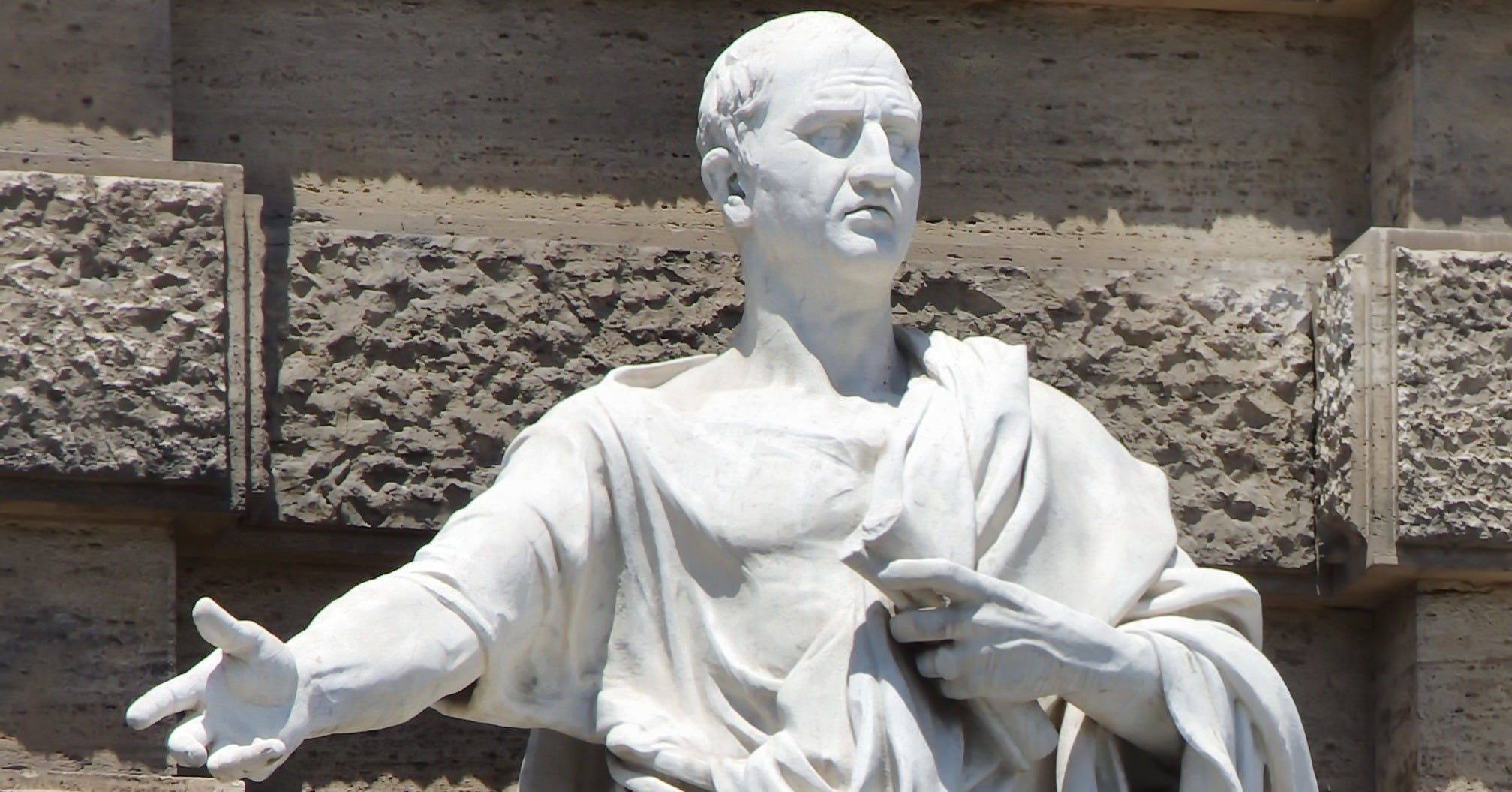
I recently came across a quote attributed to Cicero:
“More is lost by indecision than wrong decision. Indecision is the thief of opportunity.”
After a little searching, it appears Cicero probably never said it. The quote seems to belong more to the modern internet than to the Roman Republic. Yet the fact that the quote is likely fabricated only made it more interesting to me, because people overwhelmingly want Cicero to have said it. The quote sounds Roman. It carries the aesthetic of stoic decisiveness, clarity, masculine self-command, and forward motion. Its popularity depends less on historical verification than on the fact that it already harmonizes with a moral imagination many modern people admire.
In that sense, the false attribution itself reveals something important about how belief actually functions. Most people did not first investigate Cicero and then rationally conclude that the quote was admirable. Rather, the quote already felt true before questions of authorship entered the picture at all. The authority of “Cicero” merely reinforced an attraction that was already operating aesthetically. We are often drawn toward a posture, a tone, a form of life, or an atmosphere before we consciously assent to its principles. Aesthetics frequently precedes belief.
While trying to trace the quote, I came across someone answering the problem of indecision this way: “Indecision occurs when more knowledge is needed to make a choice.” There is certainly some truth in that statement. Human beings are finite creatures, and prudence sometimes requires hesitation. Yet I do not think this explanation adequately describes the character of modern indecision, especially in a world where people possess access to more information than any civilization in history.
Modern people are not paralyzed because they lack options. They are paralyzed because they are overwhelmed by them. More importantly, they are overwhelmed not merely by competing objects of choice, but by competing models of being. Every major decision now arrives attached to an entire symbolic world: a vision of success, a conception of freedom, a moral vocabulary, an aesthetic atmosphere, a prestige hierarchy, and an implied understanding of what kind of person one ought to become. The modern individual does not simply choose between careers, lifestyles, or beliefs. He chooses between rival mimetic worlds.
This has led me to think more carefully about the relationship between aesthetics and belief. I do not mean aesthetics merely in the narrow sense of artistic taste, but in the broader sense of attraction, style, atmosphere, tone, posture, and form. Human beings rarely arrive at belief through detached rational analysis alone. More often, we first encounter a way of being that appears beautiful, compelling, harmonious, prestigious, peaceful, or powerful. Only afterward do explicit beliefs begin to crystallize around that attraction.
This is true in religion, politics, education, and culture alike. Very few people first reason themselves into a worldview and then acquire its aesthetic sensibilities afterward. Usually the movement occurs in the opposite direction. Someone becomes attracted to a community, a liturgy, a style of speech, a moral seriousness, a sense of order, or even simply a mood. The imagination is captured before the intellect fully articulates why. Belief often follows aesthetics.
At the same time, the reverse movement also occurs. Once belief stabilizes, the world itself begins to appear differently. Certain things once perceived as beautiful lose their attraction, while other things previously overlooked become luminous with meaning. The person who undergoes religious conversion frequently discovers not merely that his beliefs have changed, but that his perception itself has changed. The world has been aesthetically reorganized by conviction. In this sense, aesthetics follows belief as well.
I suspect these movements cannot be separated cleanly because human beings are fundamentally mimetic creatures. We do not inhabit a neutral environment composed simply of isolated individuals and objects of desire. Rather, we live among subjects who are also models, models who are also subjects, and innumerable symbolic objects whose significance is mediated socially. Our desires are formed relationally long before they are justified intellectually. Even our perception of beauty is rarely autonomous. It emerges through imitation, admiration, participation, and social formation.
This may help explain why indecision has become such a dominant feature of modern life. The problem is not merely informational. It is mimetic. The modern person is exposed to an unprecedented number of competing models simultaneously, each demanding imitation while contradicting the others. One model calls him toward ambition, another toward simplicity. One toward radical self-expression, another toward stability and inheritance. One toward prestige, another toward authenticity. One toward technological transcendence, another toward rootedness and limitation. These models do not merely compete externally. Over time they become internalized within the composite model itself.
Under such conditions, indecision may arise not from a lack of desire, but from the presence of too many competing desires inherited from too many competing models. What appears externally as hesitation or paralysis may actually reflect an internal instability within the composite model, where rival visions of the good continue to exert gravitational force simultaneously. The person no longer knows merely what to choose. He no longer knows which model of being should organize the hierarchy of his desires.
This also explains why more information so often intensifies paralysis rather than resolving it. Information is never purely neutral. Every additional voice carries with it an implied model, a prestige structure, a vision of fulfillment, and an invitation toward imitation. The internet does not merely provide data. It multiplies models endlessly. Modern culture simultaneously commands the individual to “be yourself” while surrounding him with an infinite number of rival identities to imitate. The result is frequently not freedom, but exhaustion.
Perhaps this is why beauty matters so profoundly in human formation. Not because aesthetics replaces truth, but because attraction helps organize the soul before explicit reasoning fully matures. Human beings move toward what appears desirable long before they can adequately explain why. We learn through admiration before we learn through analysis. The imagination often reaches toward an order that the intellect can only articulate later.
The fabricated Cicero quote therefore turns out to be strangely fitting. People embraced it because it resonated with an already existing aesthetic and moral intuition. The quote succeeded mimetically before it succeeded intellectually. And perhaps that is true far more often than we would like to admit.
 | A guest post by
|
Okay, so is the attraction of aesthetics also mimetic, or is there objective beauty that attracts us?
Do you know much about Artificial Intelligence? It would be an interesting follow up to discuss these same principles as applied to AI and LLMs.
For example, the LLMs are mimetic systems in the most literal sense. Imitation is at the core of their architecture and training.
But I haven't yet been thinking about what this means from an aesthetic sense. Can a machine have an aesthetic model? Do aesthetics influence the outputs of the LLMs? Or is this another fundamental difference between human intelligence and machine intelligence?